Back to Blog
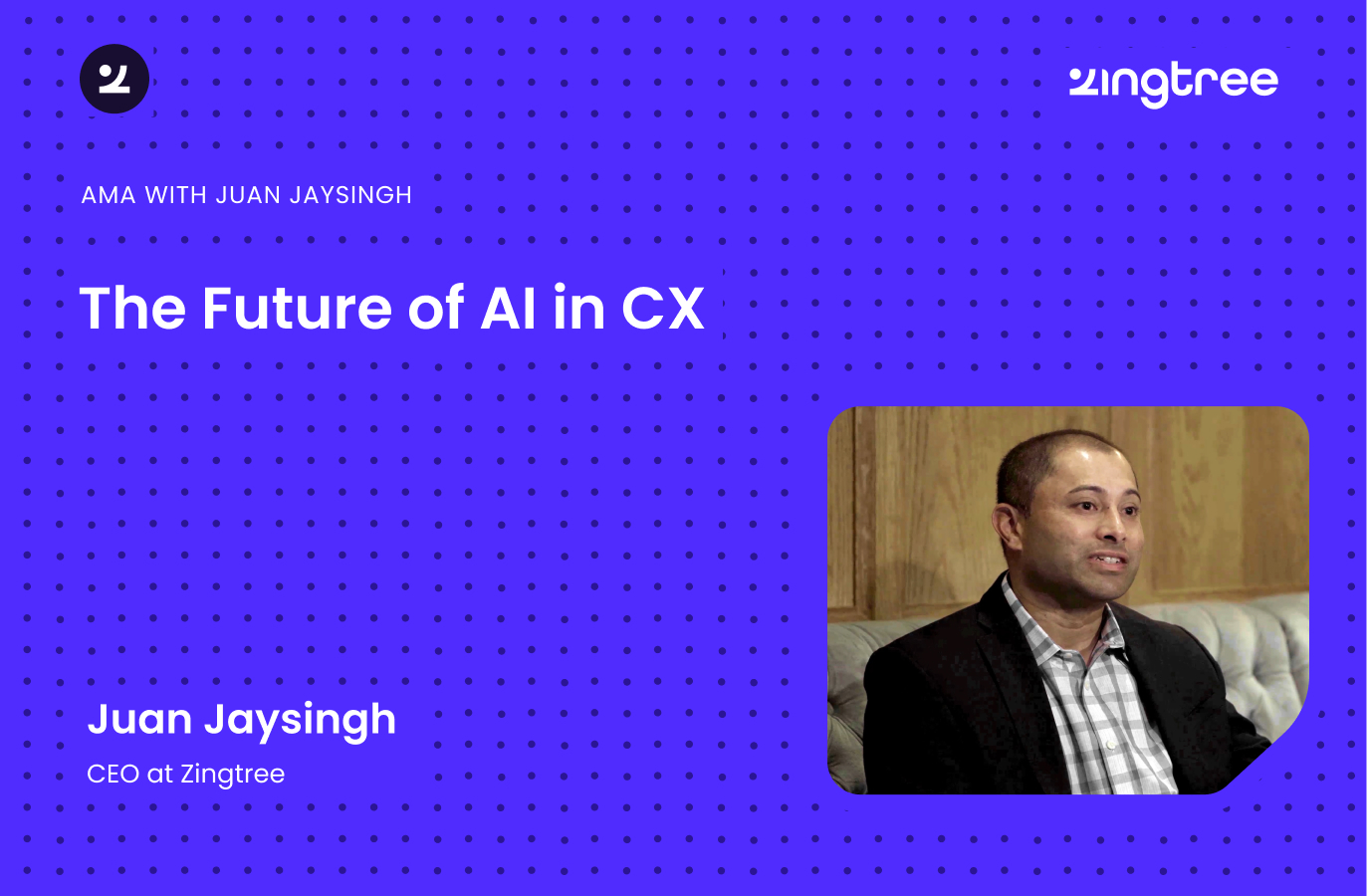
AMA with Juan Jaysingh, CEO of Zingtree: The Future of AI in CX
Zingtree CEO Juan Jaysingh breaks down where enterprise customer service is headed and what it really means to put AI to work in complex, high-stakes environments.
.webp)

10 min read

.svg)
.svg)
.svg)
In November, Juan Jaysingh, CEO at Zingtree, sat down to answer questions about the future of customer service automation, how to keep humans in control of AI, and what’s next for enterprise support teams in complex, regulated environments. This conversation reflects the real-world priorities of CX leaders facing pressure to scale support while staying compliant — and where deterministic AI platforms like Zingtree are leading the shift.
AMA with Juan Jaysingh
What direction is customer service automation heading — and how is Zingtree preparing for it?
Customer support automation is everywhere. And it makes sense because in this AI world we live in, the impact AI can make in customer service is amazing. It’s vast. It’s huge.
At Zingtree, we’ve picked a lane: complex, compliant, and regulatory industries. We’re focusing where we’ve had the most success — in healthcare, insurance, and large consumer product companies where complexity is high and compliance is non-negotiable.
What is the role of logic and control as AI takes on more responsibility in customer support?
It’s extremely critical to have logic, control, and the right rules in place for AI to perform well.
It creates the right mindset for people who are skeptical about AI — because they know they’re still in charge. Control builds trust. It’s how you get the benefits of automation without losing confidence in the outcome.
How is Zingtree evolving to better support enterprise customers?
What excites me most is how we’re now truly partnering with our customers.
Zingtree started as a self-service platform. But now we sit side by side with CX leaders, product leaders, IT teams, digital transformation leaders, and AI strategists.
We co-build. We listen. We bring our technical expertise and pair it with their domain knowledge. That’s how we deliver the right solution for their business and their customers.
What is the role of humans in an AI-powered support organization?
Humans should own AI. Take responsibility for it. AI is here to stay.
Don’t let AI run you — you run AI. You should control it, support it, direct it, and collaborate with it.
That’s the mindset we build into Zingtree. The winners will be the ones who dive in — but with a plan:
- Know which use cases need AI
- Know which don’t
- Find the right partner
- Start testing, iterating, and scaling
AI is work. But with the right structure and partner, it’s absolutely worth it.
What are enterprise buyers realizing about AI now that they didn’t a year ago?
A year ago, many came in thinking: “AI is magic — I’ll flip the switch and everything will work.”
Now they realize:
- AI only works with the right foundation: logic, structure, and guardrails
- It’s not one-size-fits-all
- Some use cases are perfect for AI, others are better handled by humans
- You need to pair AI with control and ownership
They’ve learned that AI isn’t plug-and-play. But if you put in the work — and build it right — the impact is transformational.


.png)
